GTA 6 NEWS · MARKETING
The Miami-Dade Sheriff Has No Problem With the NBA Turning Into Vice City
Back in September, Miami-Dade Sheriff Rosie Cordero-Stutz drew a hard line. Grand Theft Auto, she said in a scathing statement, is “a videogame franchise built around criminal activity,” and the county’s buses, transit stations and airport had no business promoting it. A month later, the Miami Heat are rebranding their arena as Vice City for a night, a giant “Welcome to Vice City” sign glows on the Kaseya Center roof for every incoming flight to see, and the sheriff’s office… has no objection. None. When PC Gamer asked whether the NBA’s full-throated Vice City embrace crossed the same line, a department representative confirmed the sheriff isn’t mad about the Heat at all — and in doing so, finally explained where the line actually was: public property, not the game.
What Happened
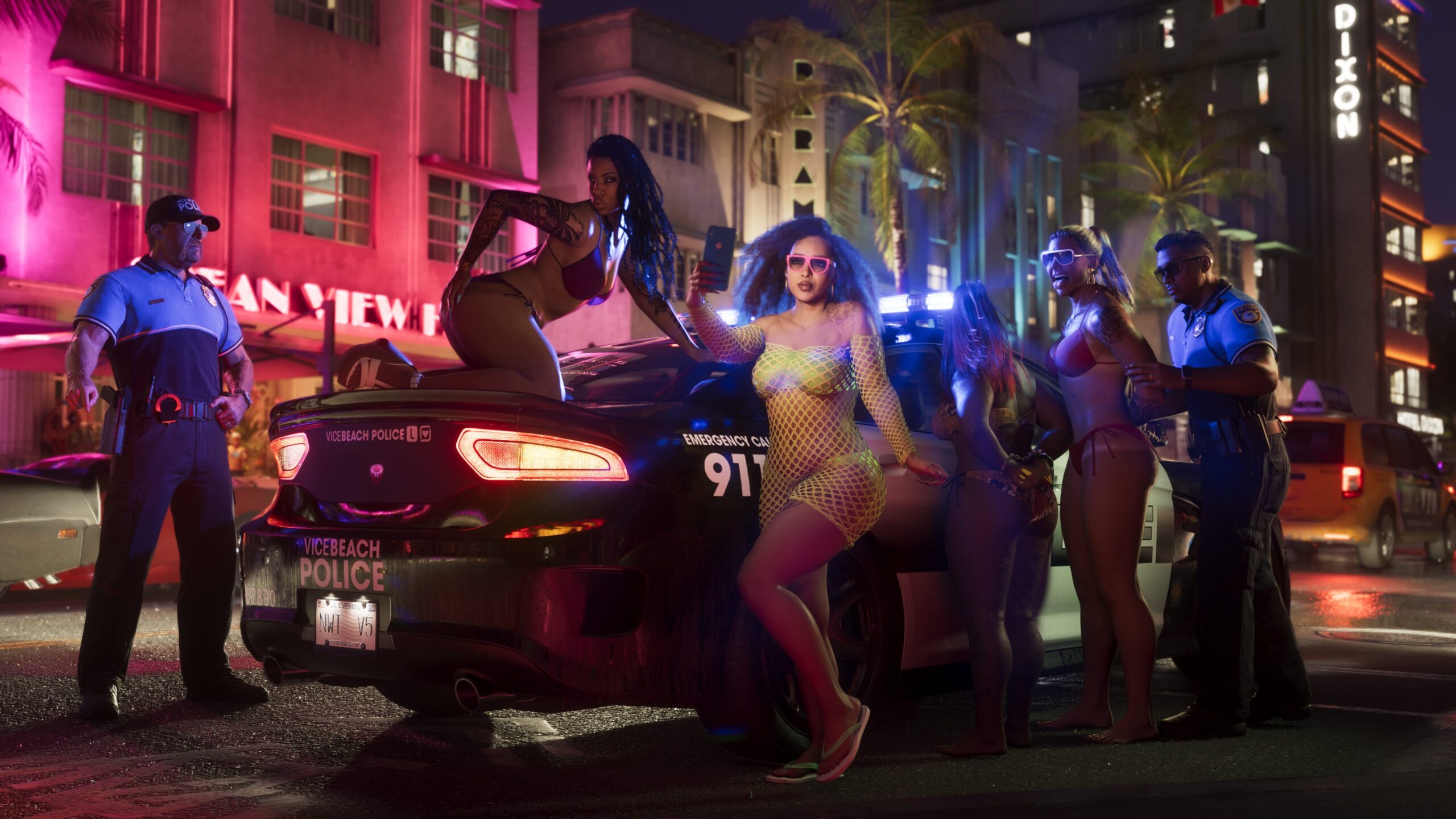
The backstory: Vice City and the state of Leonida in GTA 6 are barely-veiled riffs on Miami and Florida, and Rockstar parent Take-Two Interactive is leaning hard into that inspiration as the November 19 launch approaches. Part of that push involved paying local governments to wrap public infrastructure in Vice City branding — and when the proposed county collaboration surfaced in September, Cordero-Stutz came out swinging. Her full statement, preserved by PC Gamer’s Andy Chalk, didn’t pull a single punch: “Grand Theft Auto is a videogame franchise built around criminal activity. Its fictional world includes murder, robbery, drug trafficking, carjacking, violence against law enforcement, and other conduct that the men and women of the Miami-Dade Sheriff’s Office work every single day to prevent.”
That was then. Fast forward to October, and the promotional campaign has only gotten louder — the Heat announced “A Night in Vice City” for November 18 against the Milwaukee Bucks (the night before launch, on ESPN), with the arena and team rebranded in Vice City livery, a never-before-seen uniform, and a first-of-its-kind sports crossover experience. So PC Gamer went back to the sheriff’s office and asked the obvious question: does the NBA’s transformation bother her? The department’s new statement draws the distinction cleanly: “Sheriff Cordero-Stutz’s comments focused on the proposed use of publicly owned facilities and infrastructure, including public transportation, transit stations, and Miami International Airport, to promote Grand Theft Auto 6. Her concerns addressed the message conveyed through the use of these public assets. Those comments were not directed at promotional decisions by private businesses or organizations.”
The Line Isn’t the Game — It’s Who Owns the Billboard
Read the two statements side by side and the shift is easy to miss but hard to unsee. In September, the target was a game — its content, its themes, its glorification of exactly the crimes her deputies fight. In October, the target is retroactively narrowed to a zoning question: who owns the facility doing the promoting. The GTA 6 that “celebrates” murder and carjacking is apparently fine to celebrate from a privately owned arena roof, so long as the county isn’t the one holding the ladder.
And Miami has been holding the ladder a lot. The City of Miami Beach voted in September to approve a “discreet” GTA 6 campaign — advertising on Boucher Brothers chairs and umbrellas rather than city property, a public/private seam the city threaded deliberately. Miami commissioners separately voted to let Rockstar pay for permits allowing larger-than-normal banners, with revenue funding an Overtown trail. And the Kaseya Center rooftop sign — the one the sheriff’s statement effectively blesses — came with a $975,000 payment and a contract keeping it up through at least April 2027. As PC Gamer’s Chalk notes, trying to keep civic leadership at arm’s length from a campaign whose entire pitch is “Miami is becoming Vice City” may be a distinction without much practical difference — those chairs and umbrellas sit on public beaches too.
From Hot Coffee to a Warm Embrace
Zoom out and the real story is how far the Overton window has moved. Twenty years ago, a GTA release meant congressional letters, lawsuits and Jack Thompson’s face on every cable news channel — the Hot Coffee scandal turned a hidden sex minigame into a national morality moment. In 2026, the same franchise is being welcomed by an NBA team, celebrated on arena rooftops, and quietly cleared by the very sheriff who denounced it — because the money and the venue were private. During the Miami Beach debates, one city commissioner relayed that an officer he spoke to literally laughed off concerns about the game turning Miami into actual Vice City. Whatever panic used to sell, it isn’t selling in 2026.
What This Means for GTA 6
One: the Miami takeover is fully de-risked. With the sheriff’s office explicitly carving private promotions out of its objection, there is no remaining institutional opposition to the Vice City marketing blitz — city approvals, county contracts, NBA partnership, and now law enforcement’s blessing-by-technicality. Expect the campaign to get louder from here to November 19, not quieter.
Two: A Night in Vice City is the campaign’s crown jewel. A first-of-its-kind sports crossover, one night before launch, on national ESPN broadcast — Rockstar is buying the exact cultural mainstreaming that critics used to deny it. If any single event marks the moment GTA stopped being controversial and started being infrastructure, it’s an NBA game. Our full Night in Vice City breakdown has the uniforms, the court redesign and the activations.
Three: for Rockstar, Miami is a blueprint. The public-assets objection defined the rules — and Take-Two simply routed around them via private venues and payment structures. It’s the same play it ran with the county for the rooftop sign: the $975,000 Kaseya deal buys skyline visibility without putting a single city official on the hook for “promoting crime.” Other cities watching this play out now know exactly what the template looks like — and what it costs.
Four: launch day is about to be a Miami holiday. The sign is lit, the arena is themed, the sheriff is at peace, and the countdown reads 45 days. If you want to be part of it from your couch: pre-order GTA 6 for PS5 on Amazon or lock in the Xbox Series X|S version. And if you’re near Miami on November 18 — the Heat and the Bucks tip off the night before the biggest game launch in history inside a fully converted Vice City arena.
Want GTA 6 news the second it drops? Join the Locals — free newsletter, no spam.
As an Amazon Associate, I earn from qualifying purchases.
Related reading: A Night in Vice City, explained · The $975K Kaseya Center sign · The sign lights up over Miami · The airlifted installation · Miami Beach says yes